What Is Digital Marketing? A Beginner’s Guide for Freshers and Career Switchers

digital marketing

Ever wondered why the same brand keeps popping up on your Instagram or Google? That’s digital marketing in action.

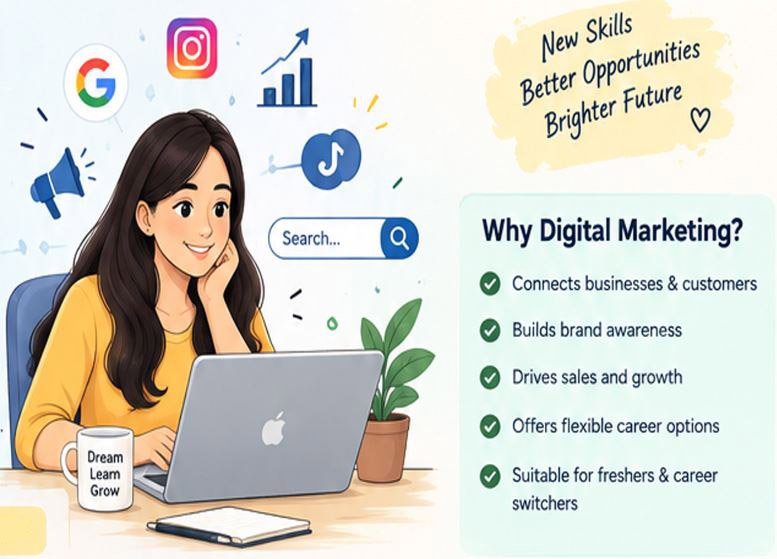
Today, businesses use digital platforms to connect with customers, build their brand, and grow sales. And the best part? With the right skills, you can turn digital marketing into an exciting career with plenty of room to grow.

Freshers, homemakers, graduates, and career switchers can all learn these skills and build a career step by step. Let’s get started and explore what digital marketing is all about.

What Is Digital Marketing?

Digital marketing is the promotion of products, services, or brands using internet-connected channels and devices — search engines, social media, email, websites, apps, and paid ads. Instead of reaching people through print, radio, or billboards, brands reach them wherever they’re spending time online.

How It Differs From Traditional Marketing?

  • Precise targeting — reach the exact audience segment, not everyone
  • Measurable ROI — every rupee spent can be tracked to a result
  • Cost-effective — small businesses can compete with big ones on a modest budget
  • Real-time optimization — pause underperforming ads, scale winning ones instantly
  • Global reach — a small shop in Kangayam can sell to customers across India or worldwide
  • Two-way engagement — customers can comment, ask questions, and build relationships with brands
  • Personalization — emails, recommendations, and ads can be tailored to individual behavior
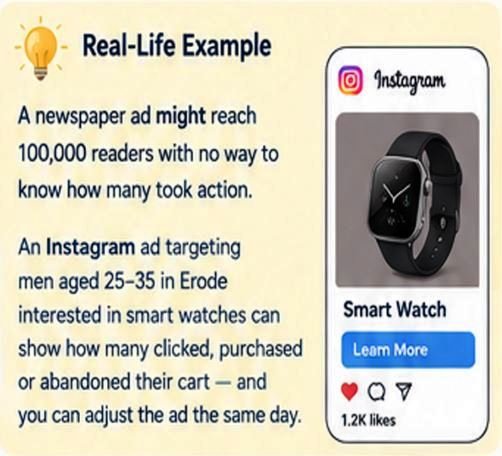
example

Digital Marketing Skills: Easier Than You Think

A common misconception is that people need advanced coding knowledge to enter this field. Coding helps for some technical roles, but many entry-level digital marketing tasks don’t require it. Useful skills instead include:

  • Basic computer knowledge
  • Communication
  • Content writing
  • Research
  • Creativity
  • Time management
  • Analytical thinking
  • Problem-solving
  • Willingness to learn
  • Basic spreadsheet skills

For a fresher or career switcher, consistency and practical work can matter just as much as a certificate.

Digital Marketing Types That Drive Online Growth

1. Search Engine Optimization (SEO)

  • Platforms: Google, Bing, websites, blogs
  • What it means: Improving a website so it can appear higher in unpaid search results.
  • Goal: Increase organic traffic and help people find a website.

2. Search Engine Marketing (SEM/PPC)

  • Platforms: Google Ads, Microsoft/Bing Ads
  • What it means: Paying to display ads when people search for specific keywords.
  • Goal: Reach potential customers quickly through paid search.

3. Social Media Marketing (SMM)

  • Platforms: Instagram, Facebook, LinkedIn, YouTube, X
  • What it means: Using social media to promote a brand, engage with customers, and build an audience.
  • Goal: Increase brand awareness, engagement, and traffic.

4. Content Marketing

  • Platforms: Blogs, websites, YouTube, social media, podcasts
  • What it means: Creating useful and relevant content to attract and educate potential customers.
  • Goal: Build trust and attract the right audience.

5. Email Marketing

  • Platforms: Email, Mailchimp, Brevo, and other email platforms
  • What it means: Sending useful, informational, or promotional emails to subscribers and customers.
  • Goal: Build relationships and encourage repeat purchases.

6. Affiliate Marketing

  • Platforms: Blogs, YouTube, Instagram, and affiliate websites
  • What it means: Promoting another company’s products or services and earning a commission from qualifying referrals or sales.
  • Goal: Generate sales through affiliate links.

7. Influencer Marketing

  • Platforms: Instagram, YouTube, Facebook, blogs
  • What it means: Working with creators who have an online audience to promote a product or service.
  • Goal: Reach a relevant audience through trusted creators.

8. Video Marketing

  • Platforms: YouTube, Instagram Reels, Facebook, TikTok
  • What it means: Using videos to educate, entertain, or promote a product or service.
  • Goal: Attract attention and communicate information visually.

9. Mobile Marketing

  • Platforms: SMS, WhatsApp, mobile apps, push notifications
  • What it means: Reaching customers through smartphones and mobile devices.
  • Goal: Communicate with customers directly on mobile.

10. Online Reputation Management (ORM)

  • Platforms: Google, social media, review platforms
  • What it means: Monitoring and managing how a brand is represented online.
  • Goal: Maintain a positive and trustworthy online presence.

Digital Marketing Tools Every Fresher Should Learn

Here’s a simple roadmap: start with website and content basics, then SEO fundamentals, then analytics — and only move to paid ads once you understand where traffic comes from and how to measure it. Tools marked with ⭐ are the ones to learn first; everything else can wait until learners are comfortable with the basics.

1. Website & Design (Start here)

ToolWhat It DoesCost
⭐ WordPressBuild and manage websites, landing pages, blogsFree + paid hosting/themes/plugins
ElementorDesign WordPress pages visually, no codeFree + Pro paid
⭐ CanvaCreate social posts, ad creatives, banners, simple videosFree + Pro paid

2. SEO & Keyword Research

ToolWhat It DoesCost
⭐ Google Keyword PlannerFind keywords, search volume, competitionFree
Google Search ConsoleMonitor search performance, indexing, SEO issuesFree
Yoast / Rank MathOptimize titles, meta descriptions, on-page contentFree + paid
UbersuggestBeginner keyword/competitor researchFree (limited) + paid
Semrush / AhrefsAdvanced keyword, backlink, competitor analysisFree (limited) + paid
Screaming FrogCrawls site for technical SEO issuesFree (≤500 URLs) + paid
PageSpeed InsightsChecks load speed and Core Web VitalsFree

3. Analytics & Tracking

ToolWhat It DoesCost
⭐ GA4Tracks visitors, traffic sources, behavior, conversionsFree
Google Tag ManagerManages tracking codes without touching site codeFree
Excel / Sheets + Looker StudioAnalyzes data, builds reports/dashboardsFree + Excel paid tiers

4. Paid Advertising (Learn after SEO + analytics)

ToolWhat It DoesCost
Google AdsAds on Search, YouTube, Display NetworkTool free; ad spend required
Meta Ads Manager + PixelFacebook/Instagram ads + conversion trackingTool free; ad spend required

5. Social, Email & Video

ToolWhat It DoesCost
Meta Business SuiteSchedules posts, manages messages/insightsFree
Brevo / MailchimpBuilds and automates email campaignsFree (limited) + paid
CapCutEdits short-form video/reelsFree + paid

6. AI-Assisted Marketing (2026 essential)

ToolWhat It DoesCost
ChatGPT / ClaudeDrafts ad copy, blog outlines, captions fasterFree + paid tiers
 

Free Digital Marketing Course For Beginners

  • Google Skillshop offers free training on Google Ads and digital advertising, including a beginner-level, India-focused digital marketing track.
  • HubSpot Academy offers a free Digital Marketing Certification Course covering SEO, content, social media, email, and advertising.
  • Google Analytics Demo Account lets you skip passive tutorials and practise directly with sample business data.

The best combination is simple: learn → practise → create a project → document it → repeat.

Digital Marketing Careers & Job Opportunities

Once the learners build foundational skills, They can explore entry-level roles such as:

  • Digital Marketing Executive
  • Digital Marketing Assistant
  • SEO Executive
  • Social Media Executive
  • Content Writer
  • Content Marketing Executive
  • PPC Executive
  • Email Marketing Executive
  • Digital Marketing Coordinator
  • E-commerce Associate
  • Marketing Analyst

Google’s own digital marketing certificate program also lists roles including Digital Marketing Coordinator, SEO Specialist, Search Engine Marketing Specialist, Paid Search Specialist, Email Marketing Specialist, and E-commerce Associate.

 Begginer’s don’t have to start with a senior title. A junior role gives you the practical experience to move into a specialization later.

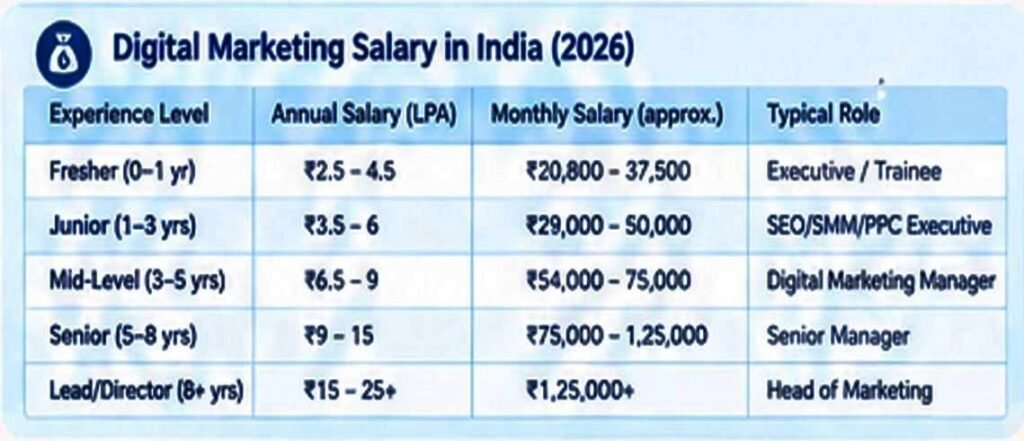
Digital Marketing Salary Details in India

Here’s a general breakdown of digital marketing salaries in India, based on commonly cited industry data (2026):

salary

Notes on the data: Entry-level Digital Marketing Executive roles typically start between ₹2.5–3.6 LPA (₹20,800–30,000/month) at the lower end of reported ranges. Self-taught freshers without certifications may start lower, sometimes ₹1.8–3 LPA, while candidates with practical experience — internships, freelance projects, a strong portfolio — can push starting salaries higher, sometimes to ₹4–5 LPA.

Salary figures are approximate and vary by city, company size, and individual negotiation. For the latest numbers, check current listings on AmbitionBox, Glassdoor, or PayScale directly.

Is Digital Marketing Suitable for Freshers and Career Switchers?

Yes — because it offers multiple specializations rather than one fixed path. Someone who enjoys writing may prefer content or SEO; someone who likes numbers may enjoy analytics or paid advertising; someone creative may prefer social media.

Beginners don’t have to choose their specialization on day one. Start with fundamentals, try different areas through small projects, and notice which type of work make learners keep enjoying. As more consumers and businesses move online, digital marketing continues to grow at a rapid pace. According to the FICCI-EY 2026 report, India’s digital advertising revenue rose 26% in 2025 to ₹947 billion, now accounting for roughly 63% of the country’s total advertising spend.

This shift is fueling growing demand for skilled professionals who can plan, execute, and measure digital marketing campaigns effectively.

Future Scope and Growth of Digital Marketing

Digital marketing is one of the fastest-growing career fields globally, driven by:

  • Rising internet and smartphone penetration, especially in India (cheap mobile data has pushed millions online)
  • AI-driven marketing — tools for AI copywriting, ad optimization, and predictive analytics are becoming standard skills
  • Video-first content — Reels, Shorts, and YouTube are consuming a growing share of ad budgets
  • Voice search and conversational commerce — optimizing for voice assistants
  • The e-commerce boom — every online store needs digital marketing to compete with major platforms
  • Regional and vernacular content marketing — strong growth in Tamil, Hindi, and other regional-language digital content as more non-English-speaking users come online
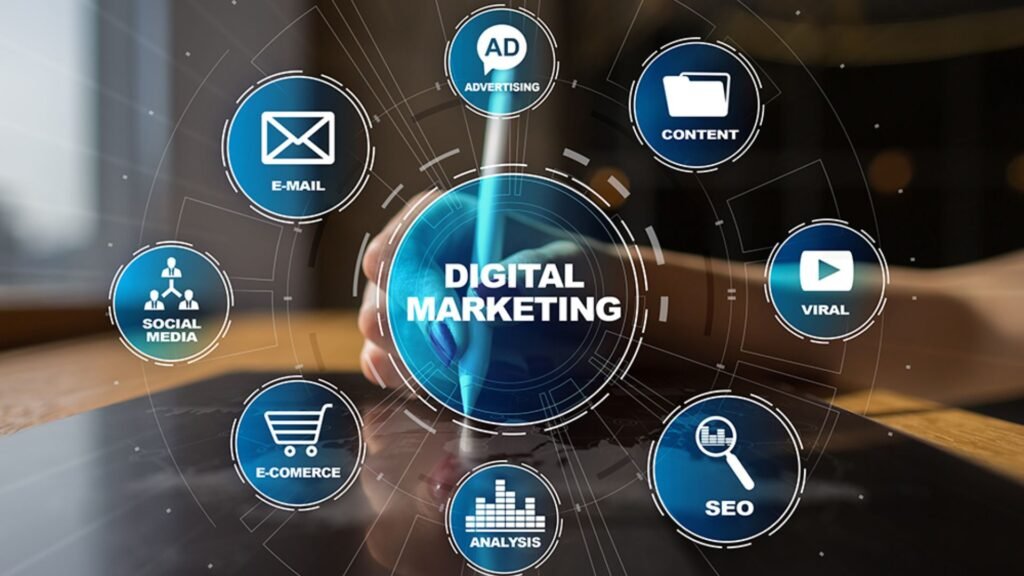
dm scope

Conclusion

Digital marketing can look complicated at first because it spans many skills, platforms, and tools — but you don’t need to learn everything at once. Start with the basics, practice regularly, create real projects, and gradually choose an area that suits you.

That’s really the whole approach: for freshers and career switchers, progress comes not from knowing it all, but from learning, practicing, and building proof of your skills, one step at a time.


Frequently Asked Questions

Is digital marketing difficult to learn?  

The fundamentals are accessible to beginners, but digital marketing is a broad field. It becomes easier when  you learn one area at a time and practice what you learn.

Do I need a degree for digital marketing?

A degree can be useful, but requirements vary by employer. Practical skills, communication ability, relevant projects, and a portfolio can also be important when applying for entry-level roles.

Can a fresher get a digital marketing job?

Yes. Freshers can apply for roles such as SEO Executive, Digital Marketing Executive, Social Media Executive, Content Writer, and Marketing Assistant. Requirements vary between employers.

How long does it take to learn digital marketing?

There is no universal timeline. A beginner can learn the fundamentals in a few months with consistent practice, but becoming proficient takes longer because tools, platforms, and strategies continue to evolve.

Is a digital marketing certificate enough to get a job?

A certificate can demonstrate course completion, but it does not automatically demonstrate practical ability. Combining a certificate with projects and a portfolio can provide stronger evidence of your skills.

Which digital marketing skill should a beginner learn first?

Start with the fundamentals of digital marketing and then explore areas such as SEO, content, social media, paid advertising, and analytics. After gaining some exposure, choose an area that matches your interests and career goals.

Leave a Comment

Your email address will not be published. Required fields are marked *